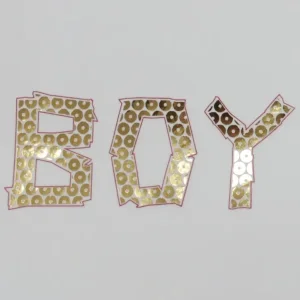
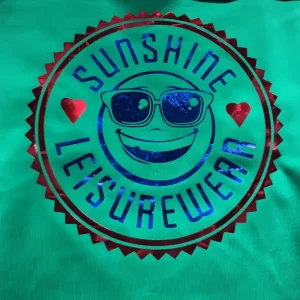
Engineered high-performance optical film, reflective badges, and light-shifting applications built to withstand rigorous industrial standards.
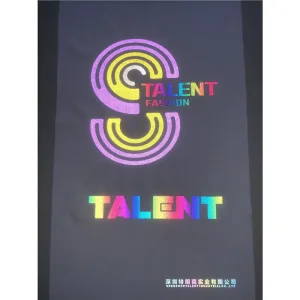
Mapping high-precision manufacturing demands, logistics distribution networks, and the integration of optical science in CEE automotive and safety apparel sectors.
Hungary has positioned itself as one of the key advanced manufacturing corridors in Central and Eastern Europe (CEE). Anchored by mega-industrial facilities in cities like Győr (Audi), Kecskemét (Mercedes-Benz), and Debrecen (BMW's upcoming smart manufacturing facility), the region is a hotbed for automotive components, electronics, and technical textiles. This industrial density demands advanced optical solutions, specifically optical variability materials used in high-visibility safety wear, smart vehicle decals, components validation, and brand security labels.
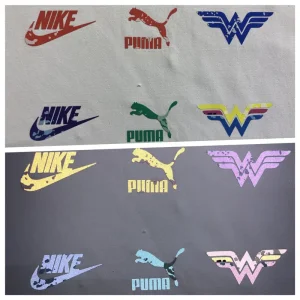
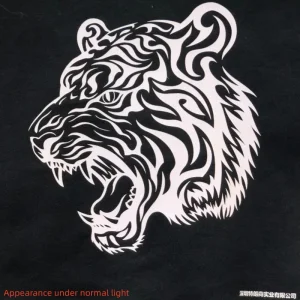
Optical variability technologies—which change appearances depending on illumination angles or UV radiation—play an indispensable role in safeguarding supply chains, preventing counterfeits, and ensuring worker safety under compliance guidelines like ISO 20471. Hungarian importers and technical designers rely on international exporters who can guarantee absolute precision, batch consistency, and direct alignment with EU occupational health and safety (OHS) regulations.
An engineering dive into refractive indexes, light dispersion properties, and polymer durability matrices.
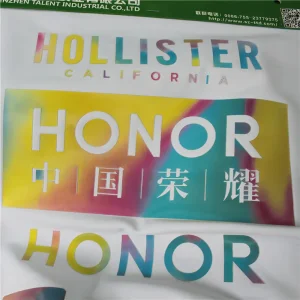
Color-travel or color-shift reflective transfers utilize optical interference coatings (OICs) to produce shifting spectral colors. Alternating layers of high refractive index (e.g., Titanium Dioxide, $TiO_2$) and low refractive index (e.g., Silicon Dioxide, $SiO_2$) coatings on microscopic silica platelets scatter light waves at predetermined phase relationships, ensuring distinct color changes as the viewing angle changes.
For reflective safety applications, retroreflection is achieved either through embedded glass beads (refractive index $RI \ge 1.93$) or micro-prismatic arrays. Light enters the sphere, refracts, reflects off a metallized aluminum backing, and travels directly back to the light source. This retroreflective efficiency is maintained even on high-stretch technical elastane fabrics.
Glow-in-the-dark (photoluminescent) and UV-reactive (photochromic) transfers rely on inorganic crystal lattices. Strontium aluminate ($SrAl_2O_4:Eu,Dy$) pigments absorb ambient UV energy and release it over a sustained 8-12 hour period. Photochromic pigments undergo molecular conformation shifts under direct UV exposure ($365\text{ nm}$ wavelengths) to reveal vibrant colors.
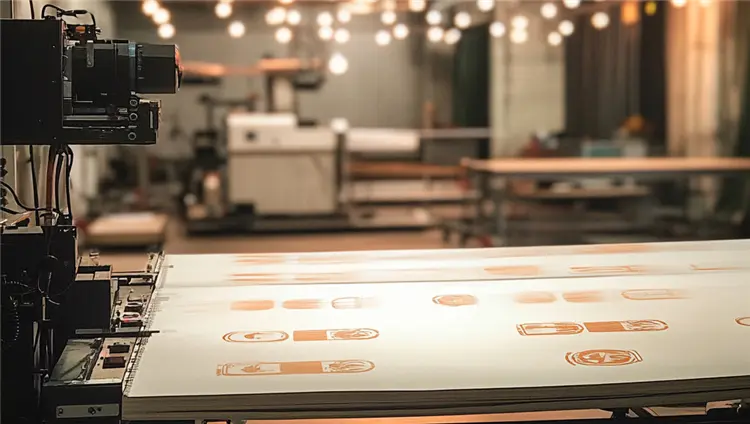
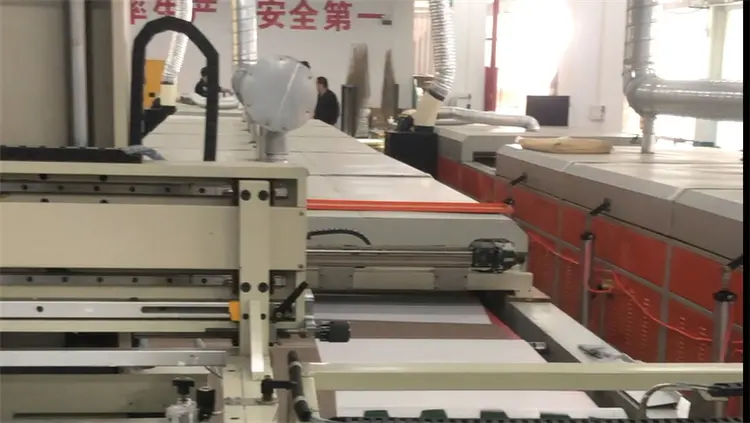
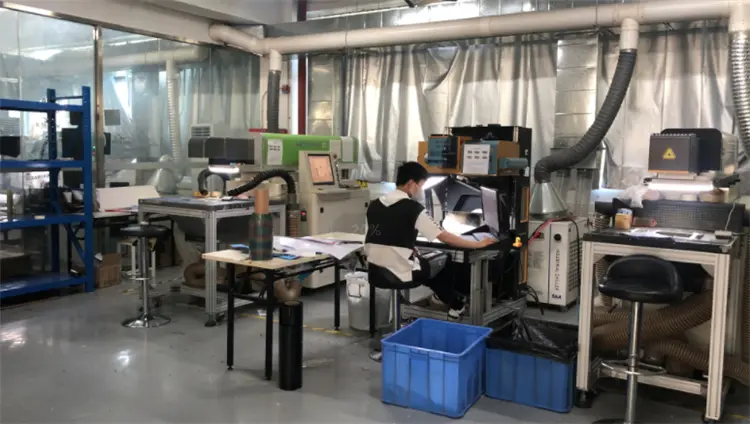
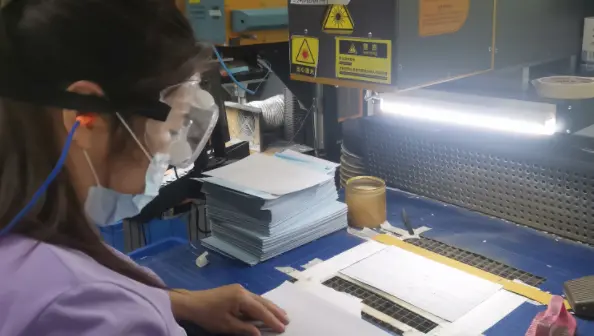
As a global epicenter for manufacturing excellence, SZ Talent integrates advanced chemical research with automated production lines. This allows us to guarantee high-performance, cost-effective thermal transfer materials directly to Hungarian distributors.
Through robust partnerships with global carriers and optimized logistics pathways (including rail freight via the China-Europe Railway Express directly terminating at Budapest terminal hubs), we minimize delivery times and handle customs clearances efficiently under established European Union import frameworks.
Estimated B2B wholesale pricing based on minimum order quantities (MOQ). Contact our sales division for customized contract estimates.
| Optical Technology / Product Code | Material Base | Standard MOQ (pcs) | Reference Price (EUR / pc) | Target Applications in Hungary |
|---|---|---|---|---|
| Reflective stretch transfers (RT-ST09) | Thermosetting Polyurethane | 1,000 | €0.12 - €0.35 | High-vis roadworks safety vests (EN ISO 20471) |
| Color-Shift Reflective (CSR-OP22) | OIC Micro-plates / Silicone | 500 | €0.45 - €0.95 | Premium athletic brand accent badges & caps |
| Photoluminescent Safety (Glow-LU07) | Strontium Aluminate / TPU | 1,000 | €0.22 - €0.55 | Emergency egress pathway clothing & mining apparel |
| Holographic 3D Silicones (Holo-SL15) | Lattice-etched Silicone | 500 | €0.65 - €1.20 | Central European designer fashion & sports logos |
| UV-Responsive Activewear (UV-ACT32) | Organic Photochromic Ink | 1,000 | €0.30 - €0.68 | Active lifestyle, outdoor cycling, and winter apparel |
Imports of thermal transfer labels and synthetic films from China into Hungary are classified under standard HS codes 3919.90.80 and 5910.00.00. Standard EU VAT applies (27% inside Hungary), which can be processed via the regional Reverse Charge mechanism for VAT-registered industrial importers. Contact us directly to generate pro-forma invoices that comply with national customs authorities (NAV).
Explore our complete collection of industry-grade materials, certifications, and specialized processes optimized for industrial and athletic applications.


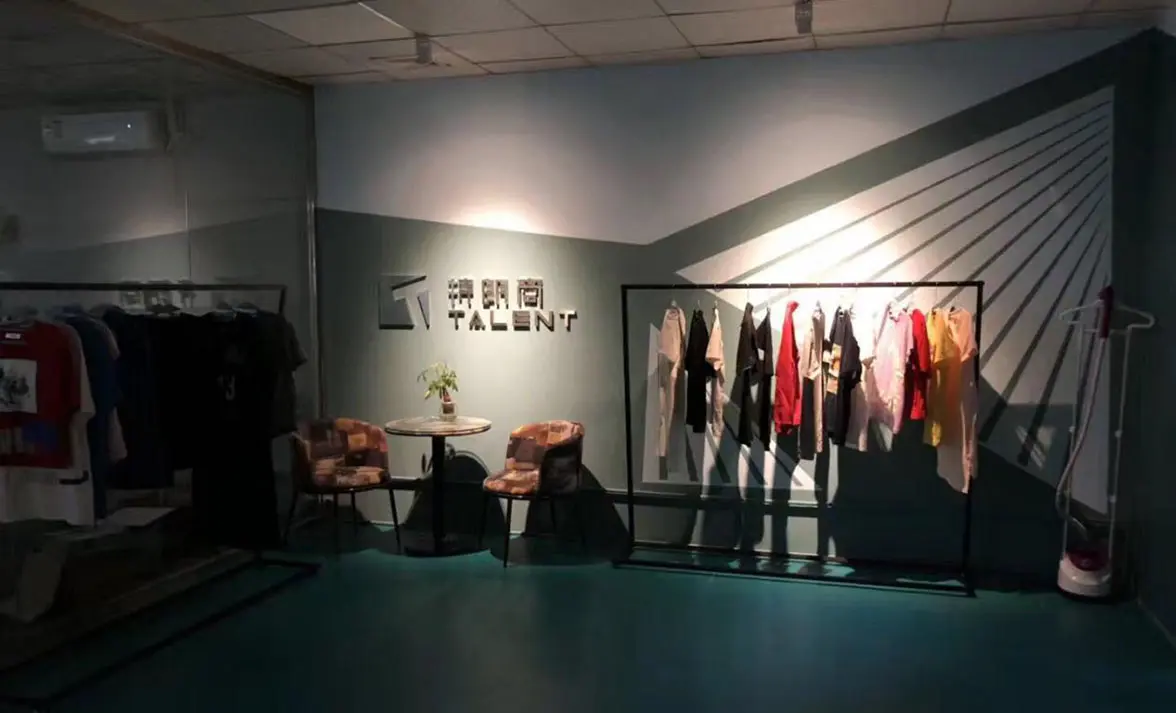
SZ Talent is a leading company with more than ten years of experience specializing in all kinds of heat transfer labels. Our comprehensive approach combines innovation, research and development, production, sales, processes and service. We are proud of our industrial automated production lines, dedicated team of technical experts and strong management system. Our focus remains on developing innovative, environmentally friendly, functional, and fashionable heat transfer products.
We adhere to the core values of quality-oriented, integrity-based, mutual benefit, promoting innovation and ensuring long-term development. Our efforts are always focused on meeting the needs of our customers.
Answers to common logistics, technical, and regulatory questions when importing optical variability materials and transfers into Hungary.
Request a free sample package containing reflective, glow-in-the-dark, and holographic transfer templates. Our engineers will assist with custom designs and provide localized quotes for the Hungarian market.
Send Inquiry Now TALENT Industrial