Explore our premium grade heat transfer patches engineered for superior durability, optical precision, and robust barrier resistance.
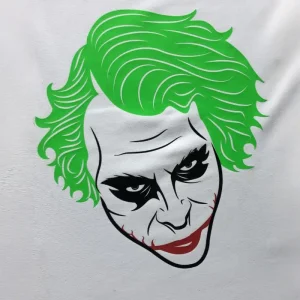
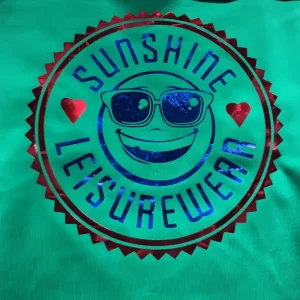
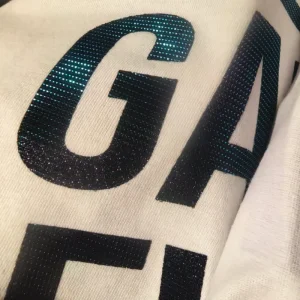
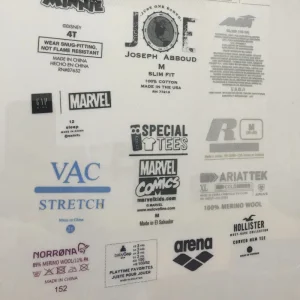
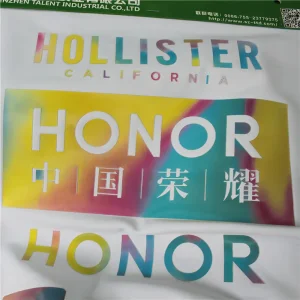
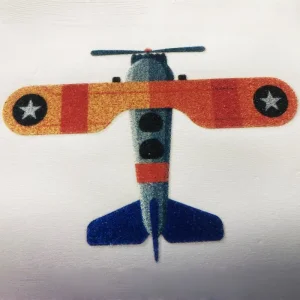
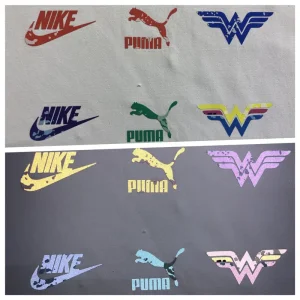
Why synthetic fabrics require dedicated anti-migration barriers to prevent dye bleed and color shifting over time.
Dye migration, commonly referred to as color bleeding or sublimation, is a chemical phenomenon where disperse dye particles in synthetic fibers (most notably polyester and polyester blends) are re-activated by heat and pressure. Under the thermal application of standard transfer labels, or even during post-processing storage, these dye molecules detach from the fabric polyester matrix and migrate upward, penetrating the polymer layers of the transfer print and altering the color dynamics of the graphic.
This causes crisp white graphics to turn pinkish on red polyester, or light yellow to turn greenish on blue fabrics. As sportswear brands increasingly pivot toward complex synthetic fabrics, spandex blends, and chemically-dyed performance polyester, finding reliable, high-performance Dye-Block & Anti-Migration Transfer Labels has become a critical milestone in QA protocols for garment manufacturers globally.
Our engineered labels incorporate a proprietary microscopic carbon absorption shield. This layer acts as a chemical sponge, filtering out and chemically binding migrating dye gases and solids at high temperature, ensuring a pristine finish with zero discoloration even after dozens of commercial laundering cycles.
A deep architectural look at how we construct multi-layered heat transfer barriers to secure color stability on high-stretch textiles.
A premium matte PET release film, chemically coated for anti-static release properties. This guarantees smooth peeling (hot or cold) after thermal pressing without fraying fine design lines or micro-elements.
Utilizes ultra-stretch, eco-friendly water-based and silicone-based PU pigments. These inks offer excellent elongation (up to 300%) to withstand heavy stretching on athletic wear without cracking.
A highly dense, synthetic carbon compound matrix formulated to prevent sublimation. It blocks dye migration at high press temperatures and maintains a solid physical block over years of storage.
Our global customers consistently report challenges with recycled polyester (rPET) fabrics. During recycling processes, dye colorants are often less structurally stable than virgin fibers, significantly increasing migration rates. SZ Talent's research and development division has developed high-density polyurethane formulas specifically to address rPET substrate challenges. These formulations comply fully with OEKO-TEX Standard 100 Class I (baby-safe certification), proving that industrial-grade anti-migration security does not need to compromise ecological and skin-contact safety regulations.
Combining ten years of specialized heat transfer label engineering with automated manufacturing capabilities.
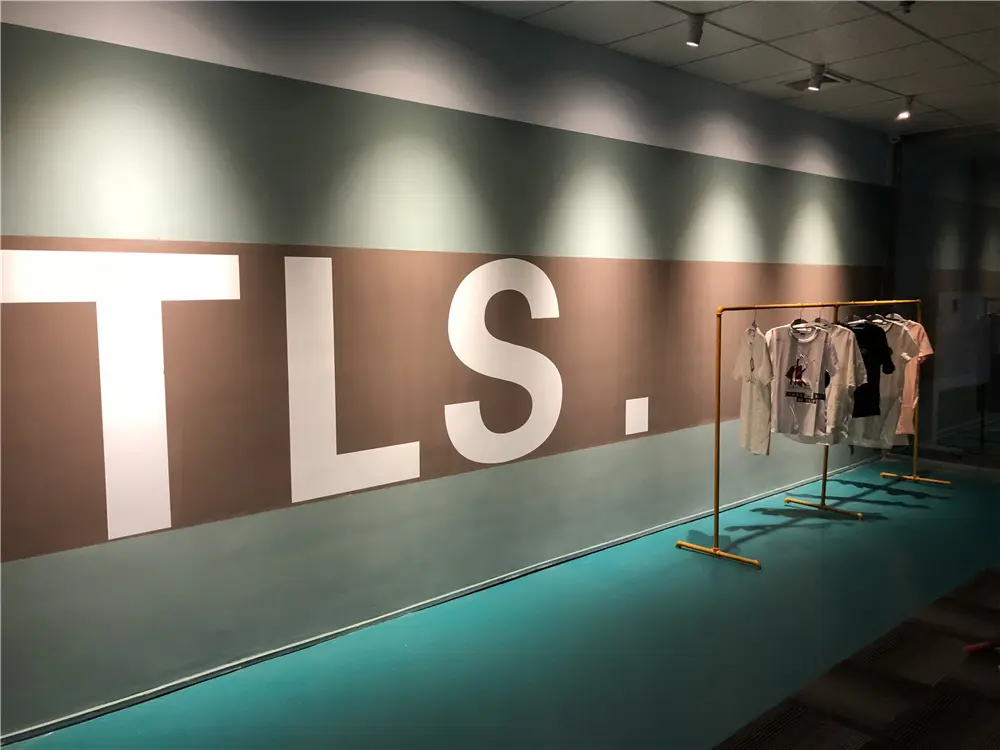
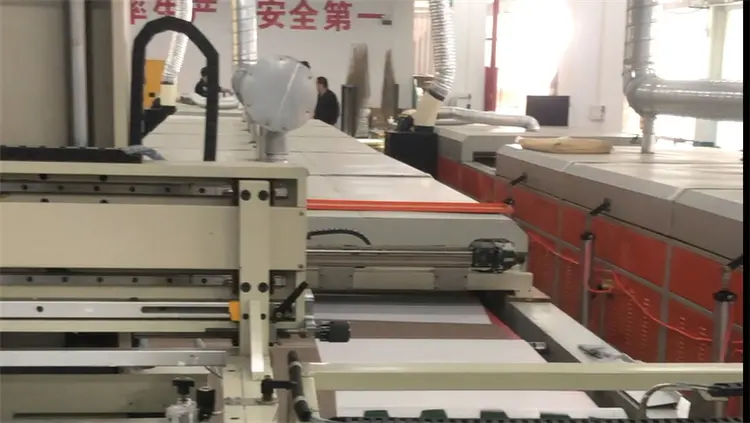
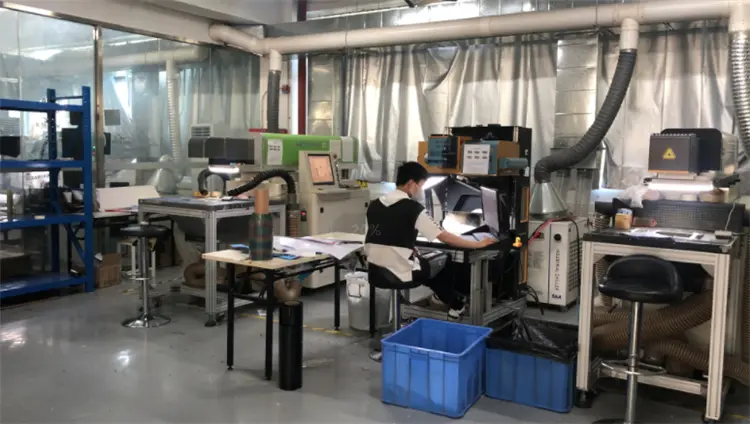
SZ Talent is a leading company with more than ten years of experience specializing in all kinds of heat transfer labels. Our comprehensive approach combines innovation, research and development, production, sales, processes and service. We are proud of our industrial automated production lines, dedicated team of technical experts and strong management system. Our focus remains on developing innovative, environmentally friendly, functional, and fashionable heat transfer products.
"We adhere to the core values of quality-oriented, integrity-based, mutual benefit, promoting innovation and ensuring long-term development. Our efforts are always focused on meeting the needs of our customers."
SZ Talent is a well-known name in the industry, known for its commitment to quality, innovation and customer satisfaction. We attach great importance to research and development and continuously introduce cutting-edge products that meet the changing needs of the market. Our commitment to excellence makes us a trusted partner for businesses looking for high-quality thermal transfer labels.
Over the years, we have experienced significant growth and expansion due to our unwavering commitment to excellence. We continuously invest in advanced technologies and processes to increase our production capabilities and meet our customers' growing needs. Our continued growth is a testament to our commitment to providing exceptional products and services.
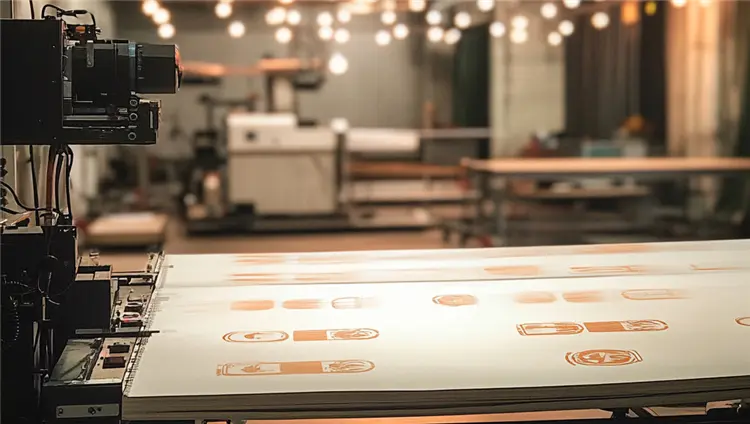
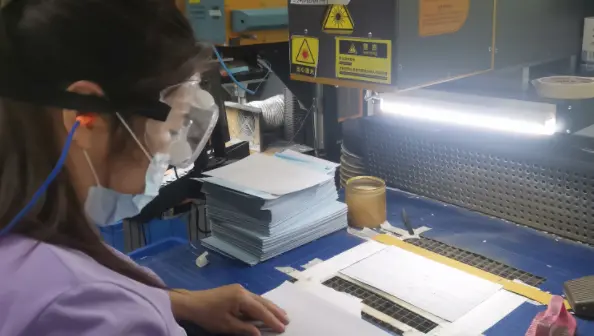
Our state-of-the-art facilities are equipped with the latest technology to ensure efficient production and high-quality output. We have made significant investments in infrastructure to create an enabling environment for innovation, research and development. Our facilities are designed to meet the highest industry standards and meet the diverse needs of our customers.
Our solutions prevent migration across high-performance textiles and highly concentrated dye matrices.
Active wear engineered from high-spandex polyester blends requires low-temperature heat seals to avoid fabric shine. Our labels adhere effectively at lower ranges (130°C–140°C) with absolute migration safety.
Soccer, hockey, and basketball jerseys printed via sublimation require dedicated black dye block layers. Our carbon formulations guarantee standard whites and neon colors maintain optical clarity without any shade shifting.
Outerwear textiles featuring heavy DWR (Durable Water Repellent) coatings and deeply saturated disperse dyes represent significant adhesion challenges. Our high-grip thermal backings guarantee long-term adhesion stability.
Following strict ISO Standards, we ensure our high-quality anti-migration transfers are applied correctly for optimal performance.
Every batch of SZ Talent anti-migration labels undergoes rigorous testing procedures to simulate long-term dye migration. We subject raw materials and finished products to simulated ovens at 70°C for up to 72 hours under heavy weight compression. This accelerates typical dye degradation, verifying that no bleed-through occurs before shipping to factories worldwide.
We strongly advise following our calibrated heat-press parameter envelope to achieve complete cross-linking of the adhesive layer without breaking down the physical structure of the technical fabric.
Applying lower heat prevents fabric scorch and limits gaseous sublimation release inside polyester substrates.
Optimizes the chemical adhesion process without oversaturating the fabric with extreme temperature build-up.
Ensures consistent mechanical connection and drives the adhesive deep into technical weave structures.
Allows the high-density carbon barrier polymer structure to solidify completely before removing the carrier film.
Detailed insights from our technical support team regarding anti-migration mechanisms, wash tolerances, and application processes.
Discover our specialized textile solutions, optimized for brand identification, athletic wear, and technical garments.
 TALENT Industrial