China’s garment industry offers a wide range of Heat Transfer Labels For Garments suppliers. They serve sportswear brands, fashion manufacturers, workwear producers, and custom apparel businesses. This guide introduces ten notable Chinese suppliers for closer evaluation.
The comparison focuses on print clarity, material safety, adhesive performance, color stability, and production consistency. It also considers sample support, minimum order quantities, delivery communication, and customization ability. These details matter when labels must survive washing, stretching, folding, and daily wear. A soft neck label should feel smooth against skin. A reflective logo should remain visible after repeated cleaning. Small details affect customer satisfaction.
Supplier claims still require verification. A polished website does not guarantee stable factory performance. Buyers should request physical samples, test wash resistance, and review production records where available. Certifications can support trust, but their scope and validity deserve careful checking. No ranking is permanent. Market conditions change.
This article uses practical purchasing concerns and industry-focused criteria to explain each supplier’s possible strengths. It does not treat one factory as suitable for every garment program. Some suppliers may excel at silicone transfers, while others may perform better with woven effects, metallic finishes, or high-volume orders. Sample testing remains essential. Communication quality also matters, especially when artwork files, color references, and application temperatures require repeated confirmation. The goal is a reliable shortlist, not an unquestioned verdict.
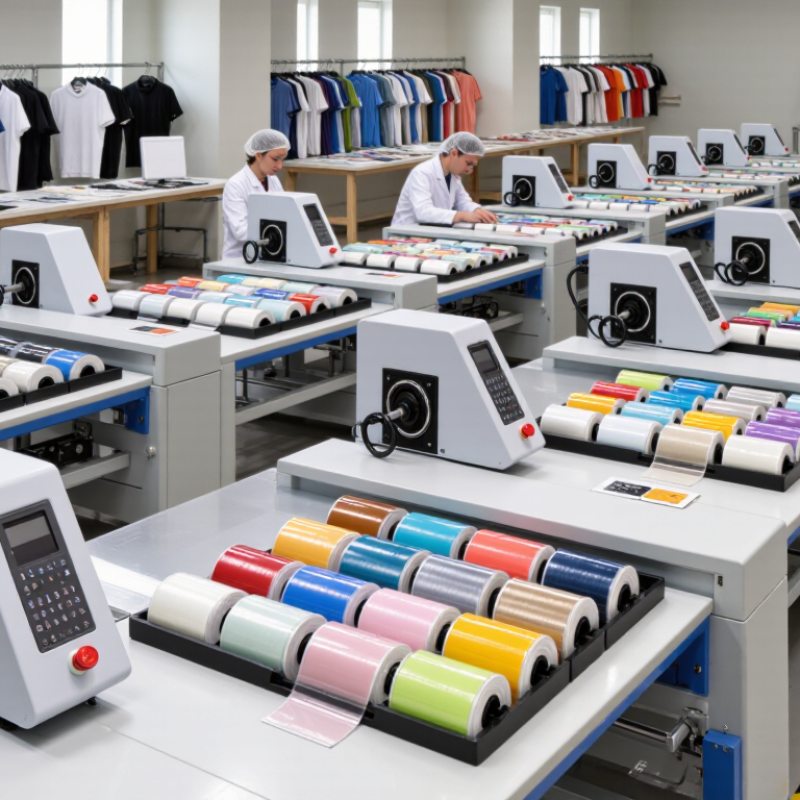
Heat transfer labels are printed designs applied directly to fabric with controlled heat and pressure. They can show size, care instructions, fiber content, or a garment’s internal identity. Unlike sewn tags, these labels leave no loose edge against the skin. This makes them useful for sportswear, underwear, children’s clothing, and lightweight garments.
The label usually contains a printed film, adhesive layer, and protective surface. During application, the machine must match temperature, pressure, and pressing time to the fabric. Cotton, polyester, nylon, and coated textiles can react differently. Experienced suppliers test each combination before production.
I recommend checking color stability, edge adhesion, stretch recovery, and wash performance. A label may look excellent on day one but fail after repeated washing. That detail is easy to overlook.
Tips: Ask for a physical sample before placing a large order. Test it after several washes, stretching, and tumble drying when appropriate. Confirm the label’s softness, readability, and position on the garment. Keep written records for temperature and pressing time. Small records prevent large mistakes. Also review the artwork carefully; tiny text can become unclear after printing. In practice, no transfer label system is perfect. Better results come from honest testing, fabric-specific adjustments, and clear production communication.
Evaluating China’s leading heat transfer label suppliers starts with real performance, not a polished catalog. Ask for samples on the same fabric used in production. A cotton tee, stretch sportswear panel, and coated outerwear piece reveal different weaknesses. Check edge lifting, color shift, cracking, and hand feel after washing. Use a written test plan covering temperature, drying method, stretch cycles, and inspection timing. Samples can mislead. They may fail after ten washes.
Reliable suppliers explain their film, ink, adhesive, and curing controls clearly. Request batch records, incoming-material checks, and final inspection photos. They should identify production dates and retain reference samples. Ask how they manage small text, fine lines, and color matching. Measure print dimensions with a ruler, not only by eye. Communication matters too. Clear answers about artwork files, tolerances, order quantities, and lead times reduce errors. If every answer sounds perfect, stay cautious. Real factories usually admit limits.
Before choosing a supplier, order a controlled pilot run and compare several lots. Review adhesion, stretch recovery, softness, packaging, and delivery accuracy. Confirm that labels meet the destination market’s textile labeling and chemical requirements. Independent testing can support internal checks for important orders. Factory audits, corrective-action records, and traceable quality documents add confidence. Price deserves attention. A cheaper transfer may cause rework, returns, and damaged garments. My evaluations are not flawless; lighting, fabric variation, and operator handling can distort results. Test it repeatedly under normal factory conditions.
China’s top 10 heat transfer label suppliers for garments are usually judged by more than price. Strong suppliers offer clear artwork review, stable color control, and reliable delivery records. Many provide stretchable transfers for sportswear, soft-touch labels for underwear, and durable marks for jackets. Their production teams should understand fabric behavior before recommending a film or adhesive.
Ask each supplier for fabric-specific samples. A transfer that works on cotton may crack on coated polyester. Good suppliers test washing, stretching, heat pressure, and edge adhesion. They should provide production samples, application settings, and inspection records. Some factories also support small batches, custom sizes, reflective effects, and low-temperature application. Useful details matter. A label must remain readable after repeated washing.
Experience is visible in the questions a supplier asks. Do they check fabric composition, dye migration, and pressing equipment? Do they explain limitations honestly? That last point is important. No transfer suits every garment. Even experienced teams can miss problems when fabric testing is rushed. Buyers should compare color standards, sample approval procedures, packaging, lead times, and after-sales responses. Supplier rankings can change because service quality depends on order size, communication, and project complexity. A careful evaluation is safer than trusting a simple “top ten” claim.
Heat transfer label suppliers now offer more than printed size marks. They provide neck labels, care labels, composition labels, logo transfers, reflective marks, and barcode patches. According to Grand View Research, the global textile printing market was valued at approximately USD 2.9 billion in 2023. Digital production is expanding quickly. This supports shorter runs and sharper artwork.
Services usually begin with artwork checking and material selection. Suppliers may recommend polyurethane, silicone, flock, or water-based transfer films. Each option changes softness, stretch, opacity, and washing performance. Good suppliers also provide strike-offs before bulk production.
A real test matters. Request wash testing at 40°C, ironing resistance, and stretch recovery data. The AATCC technical manual identifies colorfastness and dimensional stability as important textile evaluation areas.
Many factories also provide custom cutting, roll delivery, sample approval, and packaging by size or style. Some integrate QR codes, serial numbers, or production tracking marks. According to Textile Exchange’s Materials Market Report 2024, recycled polyester represented about 12% of global fiber production in 2023. Therefore, suppliers should explain whether adhesives and films suit recycled or elastic fabrics. Certification documents should be current and traceable. Ask for technical data sheets, restricted-substance declarations, and batch records. Small details prevent expensive rework.
Performance is not always perfect. A transfer can look excellent but crack after repeated stretching. My practical preference is simple: test the label on the actual garment, not only on a fabric swatch. Supplier support should remain available after delivery.
Choosing a Chinese heat transfer label supplier requires more than comparing quotations. Start with product evidence, not promises. Request physical samples for different fabrics, including cotton, polyester, stretch blends, and coated materials. Check edge clarity, color accuracy, softness, and adhesion after washing. Test the details.
Ask how the supplier controls artwork approval, ink consistency, cutting accuracy, and packing. A dependable factory should provide clear production records and traceable batch information. It should also explain its quality checks in plain language. Request recent test reports for wash durability, temperature resistance, and restricted substances. These documents do not replace your own testing.
Communication is equally important. Confirm minimum order quantities, sample fees, lead times, replacement policies, and shipping responsibilities before production. A capable supplier should answer technical questions without avoiding difficult details. Visit the facility when possible, or arrange a live video inspection. Photos can hide weaknesses. I have seen attractive samples fail after repeated washing because the fabric was never tested properly. That mistake is easy to repeat. No checklist is perfect. Leave room for a small trial order, independent inspection, and a second review before scaling production. The right supplier is not always the cheapest one. It is the one that delivers consistent labels, honest updates, and measurable quality across every batch.
| Rank | Anonymous Supplier Profile | Recommended Label Type | Suitable Garment Materials | Typical MOQ | Typical Production Lead Time | Wash Durability Target | Key Strength | Important Buyer Verification |
|---|---|---|---|---|---|---|---|---|
| 1 | Profile A — Premium Silicone Specialist | Raised or flat silicone heat transfer labels | Polyester, nylon, elastane blends, performance fabrics | 500–1,000 pcs | 7–15 working days | 40–60 washes when properly applied | Soft hand feel, flexible surface, strong visual impact | Request stretch, peel, and laundering test reports for the actual fabric |
| 2 | Profile B — High-Definition Transfer Specialist | Full-color digital heat transfers | Cotton, polyester, cotton-polyester blends | 100–500 pcs | 5–12 working days | 30–50 washes when applied correctly | Detailed artwork, gradients, photographs, and small text | Check color consistency, white underbase coverage, and migration resistance |
| 3 | Profile C — Offset and Screen Print Specialist | Screen-printed heat transfer labels | Cotton, polyester, fleece, workwear textiles | 1,000–3,000 pcs | 10–18 working days | 40–60 washes under validated conditions | Solid colors, high opacity, and economical medium-to-large runs | Confirm ink formulation, curing temperature, and color tolerance |
| 4 | Profile D — Low-MOQ Customization Specialist | Digital names, size marks, and care-label transfers | Cotton, polyester, blends, sportswear fabrics | 50–300 pcs | 3–8 working days | 25–40 washes depending on design size | Fast sampling and small-batch production | Check whether low MOQ pricing includes setup, sampling, and packaging fees |
| 5 | Profile E — Reflective Safety Transfer Specialist | Reflective heat transfer labels and graphics | Workwear, outdoor clothing, uniforms, technical garments | 500–1,000 pcs | 10–20 working days | 30–50 washes, subject to reflective material specification | Night visibility and functional workwear decoration | Request retroreflective performance data and laundering test conditions |
| 6 | Profile F — Metallic and Foil Finish Specialist | Metallic, foil, and glitter heat transfer labels | Cotton, fashion knits, polyester blends | 300–1,000 pcs | 7–15 working days | 20–40 washes depending on finish | Fashion effects, shine, and premium decorative appearance | Verify cracking, flaking, color stability, and wash-care limitations |
| 7 | Profile G — Soft-Touch PU Specialist | Thin polyurethane heat transfer labels | Cotton, polyester, elastane blends, lightweight knits | 300–1,000 pcs | 7–14 working days | 30–50 washes when properly pressed | Lightweight, flexible, and comfortable against the skin | Confirm thickness, stretch recovery, edge lifting, and press parameters |
| 8 | Profile H — Sustainable Material Specialist | Water-based or solvent-reduced transfer labels | Cotton, recycled polyester, blended fabrics | 500–2,000 pcs | 10–20 working days | 30–50 washes depending on formulation | Lower-odor production options and softer printed surfaces | Request restricted-substance documentation and material composition details |
| 9 | Profile I — Industrial Volume Specialist | Standard logo, size, and care-label transfers | Uniforms, basic apparel, sportswear, promotional garments | 5,000–20,000 pcs | 15–30 working days | 40–60 washes based on tested construction | Competitive unit cost and repeat-order capacity | Audit capacity, quality-control procedures, reorder consistency, and carton labeling |
| 10 | Profile J — Integrated Apparel Trims Supplier | Heat transfer labels combined with woven or printed trims | Most common garment fabrics, subject to adhesive testing | 1,000–5,000 pcs | 15–25 working days | 30–50 washes depending on the selected construction | One-stop sourcing for labels, transfers, patches, and packaging accessories | Confirm subcontracting control, product specifications, and batch traceability |
| Selection benchmark: MOQ, lead time, and wash durability are typical industry quotation ranges rather than guaranteed specifications. Final performance depends on transfer material, garment composition, application temperature, pressure, dwell time, and washing conditions. Always approve a production sample and request test documentation before placing a bulk order. | ||||||||
Start with production samples, not polished catalogs. Test labels on the actual garment fabric. Compare adhesion, softness, color, cracking, and edge lifting.
Cotton, stretch fabric, and coated outerwear behave differently. A transfer may work on cotton but crack on coated polyester. Test each material separately.
Use a written plan covering washing temperature, drying method, ironing, and inspection timing. Check samples after several washes. Ten washes may reveal hidden failure.
Ask about film, ink, adhesive, curing temperature, and application pressure. Request technical sheets and recommended settings. Clear limits matter.
Request batch records, incoming-material checks, inspection photos, and retained reference samples. Measure label dimensions with a ruler. Visual checks alone can mislead.
Services may include neck labels, care labels, composition marks, reflective details, barcodes, custom cutting, and packaged size sets. Artwork review should happen before production.
Run a controlled pilot order and compare multiple lots. Review delivery accuracy, packaging, stretch recovery, and after-sales communication. Cheap labels can create costly rework.
Be cautious when every answer sounds perfect. Reliable factories usually admit material limits. Slow replies, vague tolerances, and missing records deserve attention.
Rankings can change with order size, communication, and project difficulty. Independent testing adds confidence. My own evaluations may be imperfect because lighting and handling affect results.
Heat Transfer Labels For Garments are practical, lightweight identification solutions applied to clothing through heat and pressure. They can display sizes, care instructions, composition details, logos, or decorative graphics while reducing the need for sewn-in tags. A high-quality label should offer clear printing, strong adhesion, soft hand feel, durability after washing, and compatibility with different fabrics and production conditions.
This article introduces ten leading types of Chinese suppliers based on product quality, customization capabilities, production capacity, communication, delivery reliability, certifications, and customer support. It also reviews the services these suppliers commonly provide, including artwork preparation, sampling, color matching, material selection, bulk production, packaging, and shipping coordination. To choose the right partner, garment manufacturers should compare sample performance, minimum order quantities, pricing, lead times, technical guidance, and quality-control procedures. Matching the supplier’s expertise with the garment’s fabric, intended use, design requirements, and target market can help ensure consistent results and efficient long-term cooperation.

TALENT Industrial